JSW Centre for Climate Change and Health

School- Based Climate & Health Awareness Project
JSW Centre for Climate Change and Health
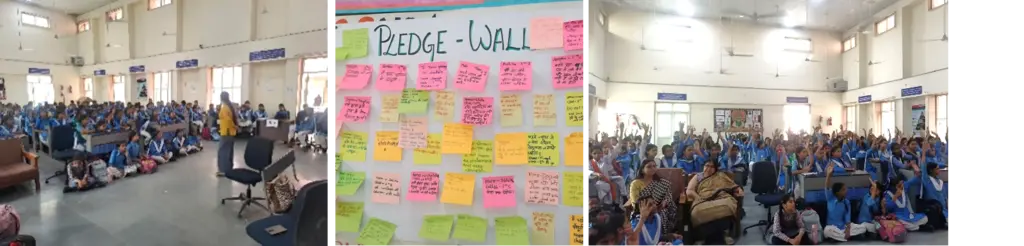
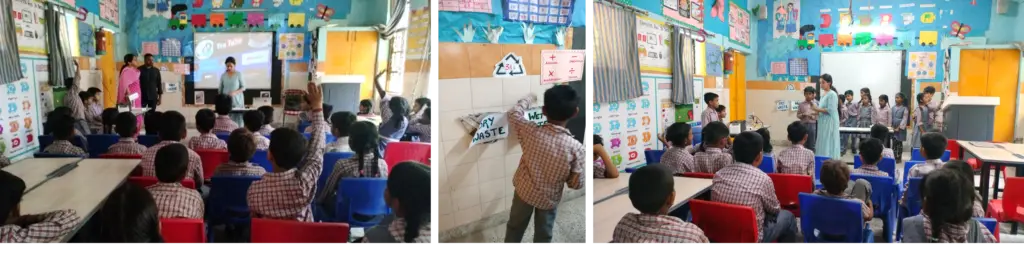
As part of the School-Based Climate & Health Awareness Project, the JSW Centre for Climate Change and Health conducted interactive sessions with students of Classes 6-8 at the Senior Girls School, Badarpur on 29th April 2026 with an enthusiastic participation from over 200 students.
Using the engaging ‘Climate Change & Our Health’ learning module developed by Dr. Sandeep Kaur, students explored how changing seasons, rising temperatures, air pollution, and extreme weather events directly impact their health, food, water, and daily lives. Dr. Sandeep also shared simple, actionable steps that students can incorporate into their daily routines to help combat the effects of climate change.
During the discussion, many students highlighted how erratic weather and intense summer heat directly affect their households’ daily water supply. They shared practical insights into how water scarcity affects basic hygiene and hydration at home, showing a sharp, real-world understanding of how environmental shifts affect everyday family life.
The session was followed by an engaging activity- the Pledge Wall Activity. Each student, our young Climate Champion, wrote down one personal climate action they commit to adopting, such as saving water, reducing plastic use, planting trees, or maintaining clean surroundings. These pledges collectively served as a powerful reminder that small individual actions can lead to meaningful change.
It was truly inspiring to witness the students’ enthusiasm, thoughtful questions, and strong commitment towards building healthier environments for themselves and their communities.
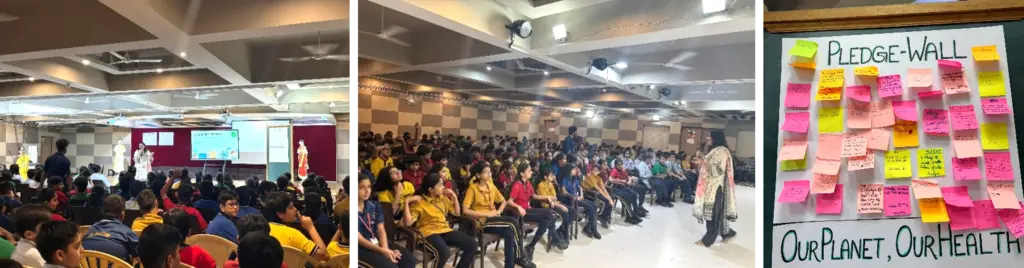
Our School-Based Climate & Health Awareness Project at Shalom Presidency School, Gurugram, on 30th April 2026 with 200 students of Classes 6–8.
The focus of the session was on helping students connect the dots between climate change and its impact on health using the “Climate Change & Our Health” module developed by Dr. Sandeep Kaur.
During the interactive module, students mapped local weather shifts eagerly, and shared personal reflections on how erratic seasonal changes and extreme heatwaves directly disrupt their daily outdoor play and physical well-being. They actively debated how rising temperatures exacerbate diseases like dengue in their urban high-rises, demonstrating a sophisticated grasp of health risks.
What made the session special was the way students responded to the topic—not just by listening, but by thinking, questioning, and imagining their role in building a better future. The Pledge Wall Activity added a personal touch, turning ideas into commitments and learning into action.
The energy in the room was a reminder that when young people are given the space to engage meaningfully, they don’t just participate—they lead.
Can you teach complex climate science to a 9-year-old? Absolutely, you just need a bit of healthy competition.
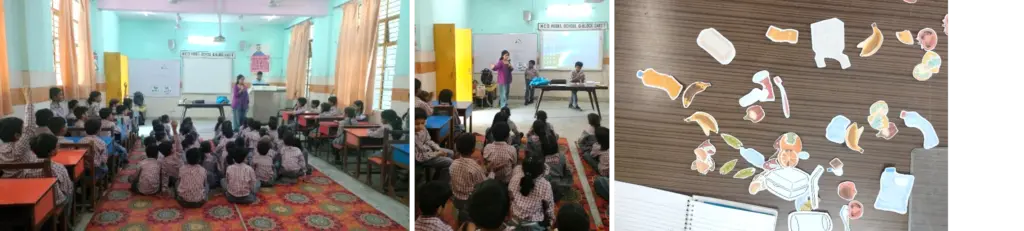
Our school-based Climate & Health Awareness Project at MCD Model School, Saket on 6th May 2026 was a masterclass in curiosity. We engaged 70 students from Classes 4 and 5, not through lectures, but through action. Students were apprised of waste segregation through a healthy competition of sorting biodegradable and non-biodegradable waste. The young participants eagerly rushed forward to sort everyday items like plastic wrappers, pencil shavings, and fruit peels into different designated bins. They even discussed how improper accumulation of trash can lead to foul odours, pests, and contaminated water, indicating a clear understanding of how basic waste management can keep their immediate surroundings clean and disease-free. This wasn’t just an activity; it was a demonstration of how small, individual choices can prevent larger environmental crises.
Such early interventions are crucial because children don’t just learn, they influence. These “Climate Champions” are now equipped to take these segregation habits back to their own homes & families.
For our session at MCD Primary School, Pushp Vihar, on 7th May 2026, we moved beyond the “what” of climate change and dived into the “where.” We challenged students to connect global environmental shifts with the changes they see in their own neighbourhoods, from rising summer temperatures to the local waste they pass through on their way to school.
By grounding the 3Rs (Reduce, Reuse, Recycle) in their daily surroundings, the students moved from being passive observers to active problem solvers. During our waste sorting session, the teamwork on display was incredible. Students weren’t just winning prizes; they were debating which bin a specific item belonged to, based on its material.
During the interactive session, the students pointed out how common it is to see plastic packets and wrappers piled up outside on their daily walk to school. In the classroom, they shared simple observations about how dusty air or smoke from nearby roadside burning makes them cough, realizing that proper waste management can help keep the air cleaner for everyone.
Environmental literacy isn’t about memorizing definitions; it’s about fostering a sense of responsibility for one’s own backyard. Seeing these students connect the dots between local pollution and global health reminds us why this outreach is critical.
Activity 1: Hand Hygiene Awareness Programme
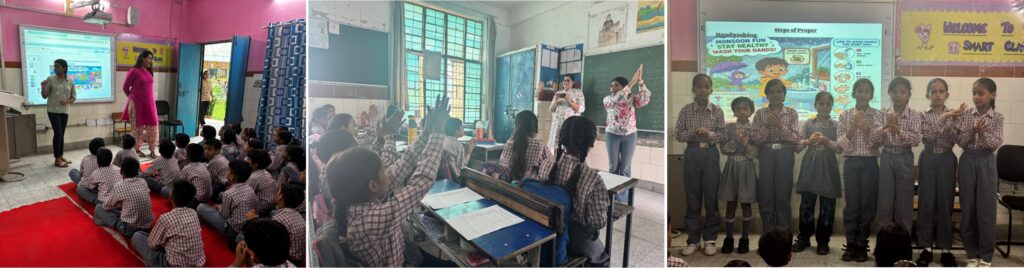
Around 210 primary class students from all four MCD Government Schools participated in an interactive hand hygiene awareness programme organized by the JSW Centre for Climate Change & Health, PHFI during the monsoon season. The session aimed to educate students about various infections that can be avoided by maintaining proper hand hygiene during this season and teach them simple ways to stay free from seasonal diseases. Proper technique of handwashing was demonstrated to the students. Students learned about preventing seasonal infections through proper hand hygiene, followed by a demonstration and group practice of the correct handwashing technique so that they can follow healthy hygiene habits at home and in school. The best-performing group was awarded a prize.
Activity 2: Awareness Session on Mosquito-Borne Diseases and Prevention of Mosquito Breeding
The students were apprised about diseases such as dengue, malaria etc., the dangers of exposure to stagnant water, and the importance of keeping their surroundings clean. Students were given a worksheet to aid in identifying potential mosquito breeding sites within their school premises and were encouraged to report presence of any stagnant water to their teachers to prevent mosquito breeding.
These interactive sessions were led and coordinated by Dr. Sandeep Kaur, Faculty, IIPH-Delhi and JSW CCCH intern, Dr. Ratika John. The activities created an atmosphere of enthusiasm and teamwork among students, making the session both educational and enjoyable. By combining interactive learning with practical health messages, the initiative empowered young students to adopt safer behaviours and become advocates for healthier communities during the monsoon season.