JSW Centre for Climate Change and Health


Roundtable on catalyzing Action for Climate Resilience in Health Systems
JSW Centre for Climate Change and Health
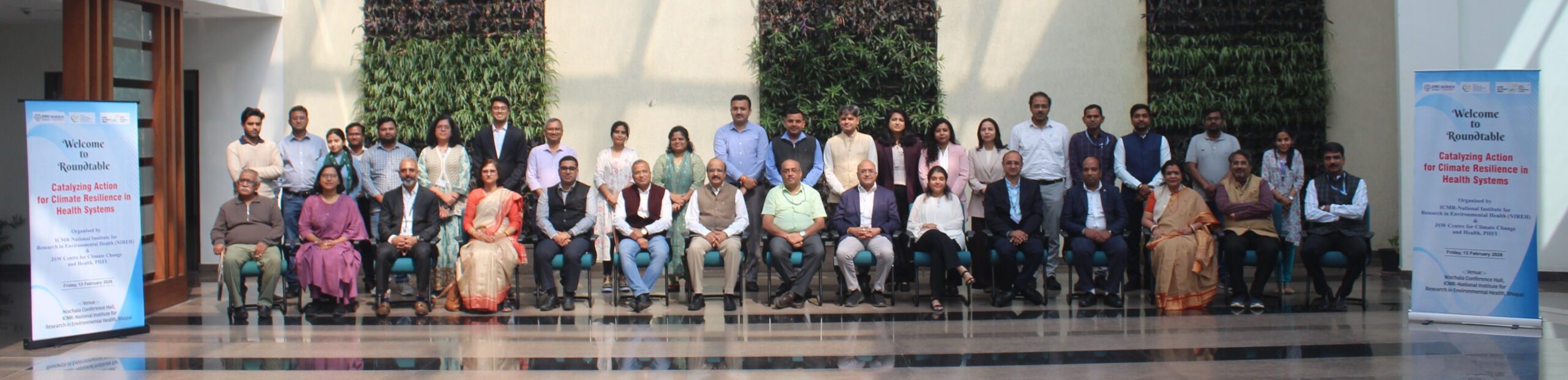
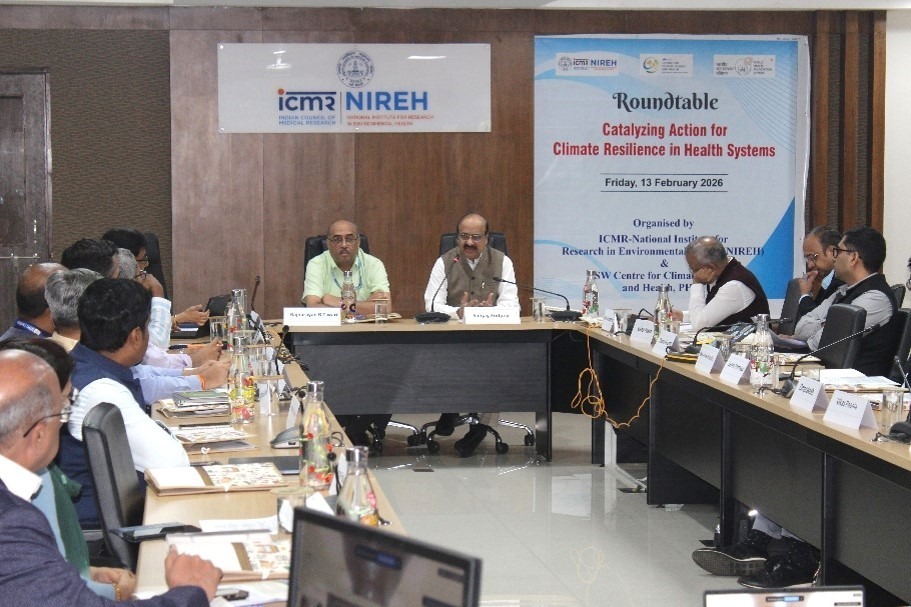
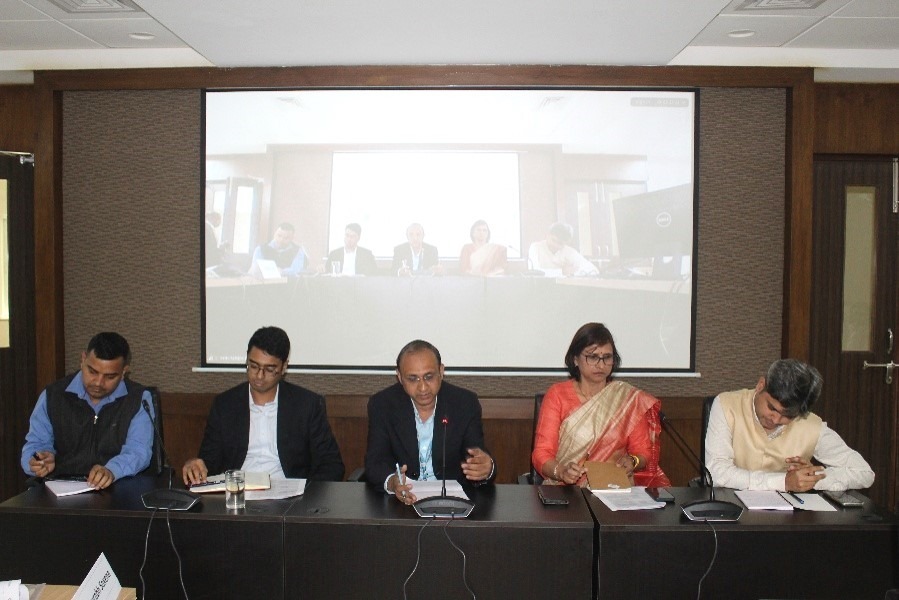
The JSW Centre for Climate Change and Health (JSW CCCH) at PHFI co-hosted a Roundtable with ICMR–National Institute for Research in Environmental Health (ICMR-NIREH), Bhopal on “Catalyzing Action for Climate Resilience in Health Systems” on 13 February, 2026 at ICMR-NIREH, Bhopal.
The convening brought together senior experts across disciplines including public health, civil engineering, forestry, architecture and urban planners to identify priority actions and good practices for strengthening climate-resilient health facilities, and consolidate pragmatic insights about implementation considerations for climate-resilient health facilities in India.
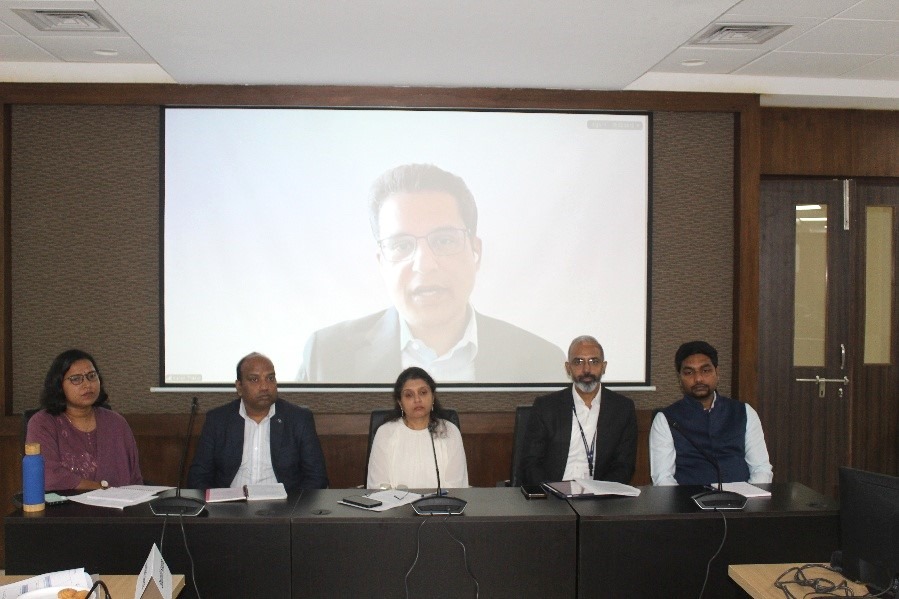
The roundtable was presided over by Prof Sanjay Zodpey, President, PHFI, and Dr Rajnarayan Tiwari, Director, ICMR-NIREH. Prof Preeti Negandhi, Professor and Chair, JSW CCCH provided an overview of the JSW CCCH and set the context for the roundtable deliberations. Dr Aakash Shrivastava, Additional Director & Head, National Programme on Climate Change and Human Health (NPCCHH), NCDC, virtually delivered an overview of the NPCCHH, with a special emphasis on advancing climate-resilient health systems. Drawing attention to the emerging challenges, Mr Chandan Khanna, India Program Manager, Health Care Without Harm (HCWH), presented the climate risks and vulnerabilities confronting health systems in India, while emphasizing the critical importance of building healthcare workforce capacity.
Our esteemed panel of experts- Dr Karan Thakur (Apollo Hospitals), Dr OP Singh (CEEW), Dr Prashanth (UNICEF Madhya Pradesh), Dr Saumya Singh (IIFM Bhopal), Dr Sandul Yasobant (IIPH Gandhinagar), Mr Lanvin Concessao (WRI India), Mr Aniket Choudhary (SCOPE Impact), Dr Rama Umesh Pandey (NCSRDP), and Dr Vikas Poonia (MANIT) contributed to a rich and engaging discussion on operationalising climate-resilient health systems. The dialogue spotlighted proven pathways and best practices, while also addressing related issues to bridge the gap between policy ambition and frontline capacity to strengthen climate resilience across health systems. We extend our sincere thanks to our moderators, Prof Preeti Negandhi and Dr Vishal Diwan (ICMR-NIREH), for expertly steering the conversations. We also extend our thanks to all the expert participants for the high-level technical discourse and valuable inputs that were pivotal to the deliberations.
One of the highlights of the event was Voices from the Field, where Dr Nitin Ambadekar, Director of Health Services, Government of Maharashtra, outlined the State’s multi-pronged response to climate risks, including heat action planning, migration surveillance, and monitoring climate-sensitive diseases. He discussed strategies for bolstering climate resilience in health infrastructure, specifically citing solarisation and rainwater harvesting initiatives. This was followed by a discussion with the medical officers from Bhopal, who shared lived experiences from their health centres, grounding the discussions in implementation realities.
Critical challenges discussed included barriers to affordability of low-carbon materials, regulatory and HR constraints, and liability risks that discourage innovation. Participants also emphasized that health systems are now confronted with compound and cascading climate crises, demanding a shift from linear planning to multi-pronged, adaptive, anticipatory approaches.
Key reflections:
Way forward: Leveraging AI-enabled learning, strengthening cross-sectoral collaboration, and co-creating context-relevant solutions with communities will be critical as we move from data to decisive action. Building resilience is not only about transforming systems, but also about safeguarding the most vulnerable, placing equity at the centre of climate and health responses. There is also a pressing need to provide clear directives to the grassroots health workforce on programme priorities, ensuring they are empowered to act without feeling overburdened.